
How to Calculate Stockpile Volumes
Using Free Estimation Software
october 2026
Accurately estimating stockpile volumes is an important part of construction, earthworks, and material management. Whether you’re measuring piles of sand, gravel, soil, or aggregate, knowing how much material you have on site helps with planning, costing, and tracking quantities.
There are several ways to calculate stockpile volumes, ranging from simple mathematical formulas to spreadsheets and specialist earthworks software.
In this guide, we’ll explore four methods for calculating stockpile volume, including their advantages, limitations, and when to use each.
Watch the Full Stockpile Volume Tutorial
Prefer video? Follow along with our video tutorial to see how to calculate stockpile volumes using all the different methods described below.
Method 1: Using Simple Geometry
One of the quickest ways to estimate stockpile volume is to approximate the pile as a regular geometric shape.
This approach works particularly well for stockpiles that resemble a cone or triangular prism.
All you need are a few basic measurements, which can usually be taken on site in a matter of minutes.
However, these calculations provide approximate volumes. Real stockpiles rarely form perfect geometric shapes, so results should be treated as estimates rather than precise quantities.
Cone-Shaped Stockpiles
Cone-shaped stockpiles are common when loose materials such as sand, gravel or grain are deposited in one location.
As the material falls, it naturally forms a mound with relatively uniform slopes. This happens because granular materials tend to settle at a characteristic slope, known as the angle of repose.
Radius (r): Distance from the centre of the stockpile to its base edge.
Height (h): Vertical distance from the base to the highest point.
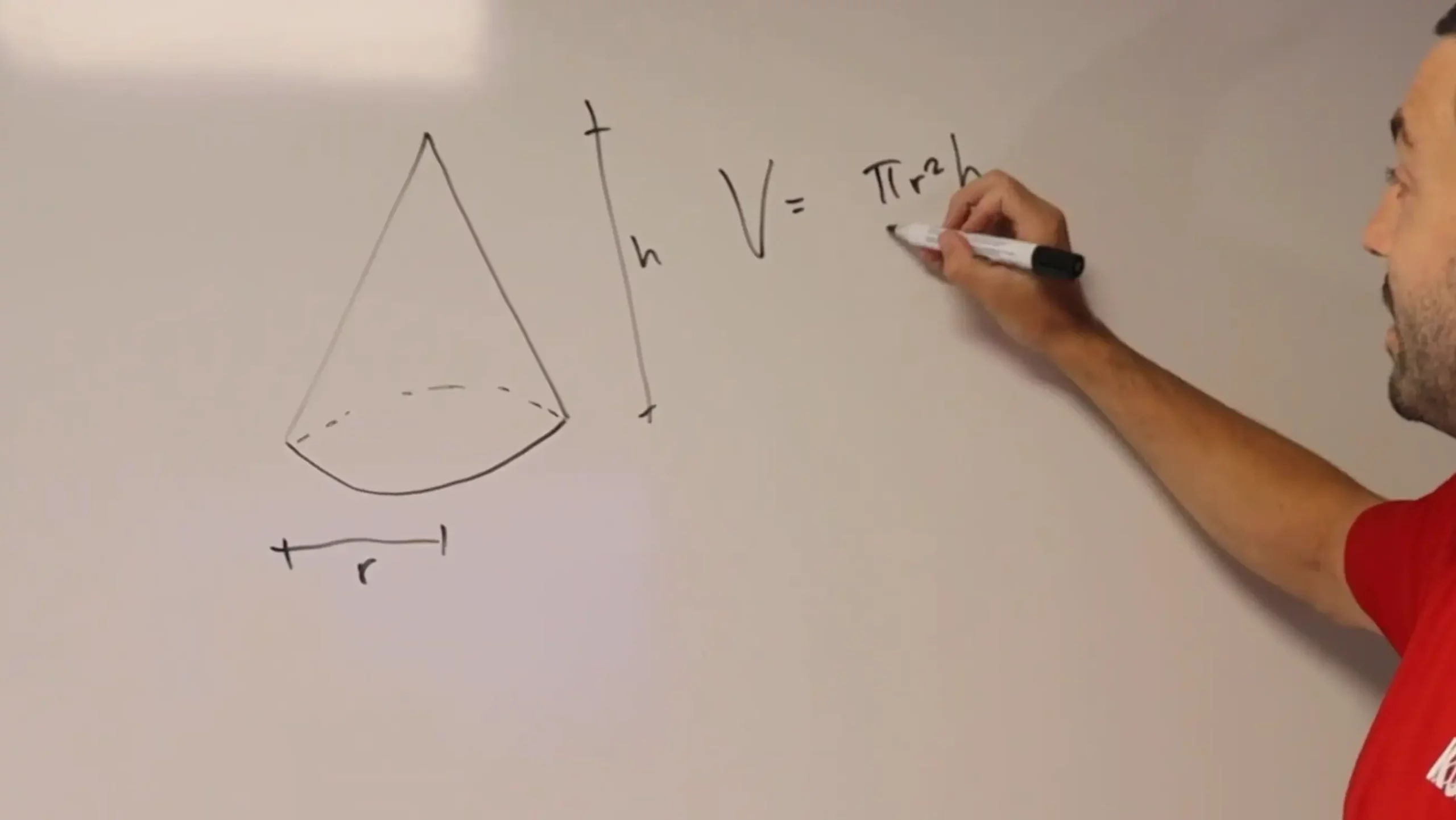
A sand stockpile has a radius of 5 m and a height of 3 m.
V = (π × 5² × 3) / 3
Estimated stockpile volume.
Triangular Prism Stockpiles
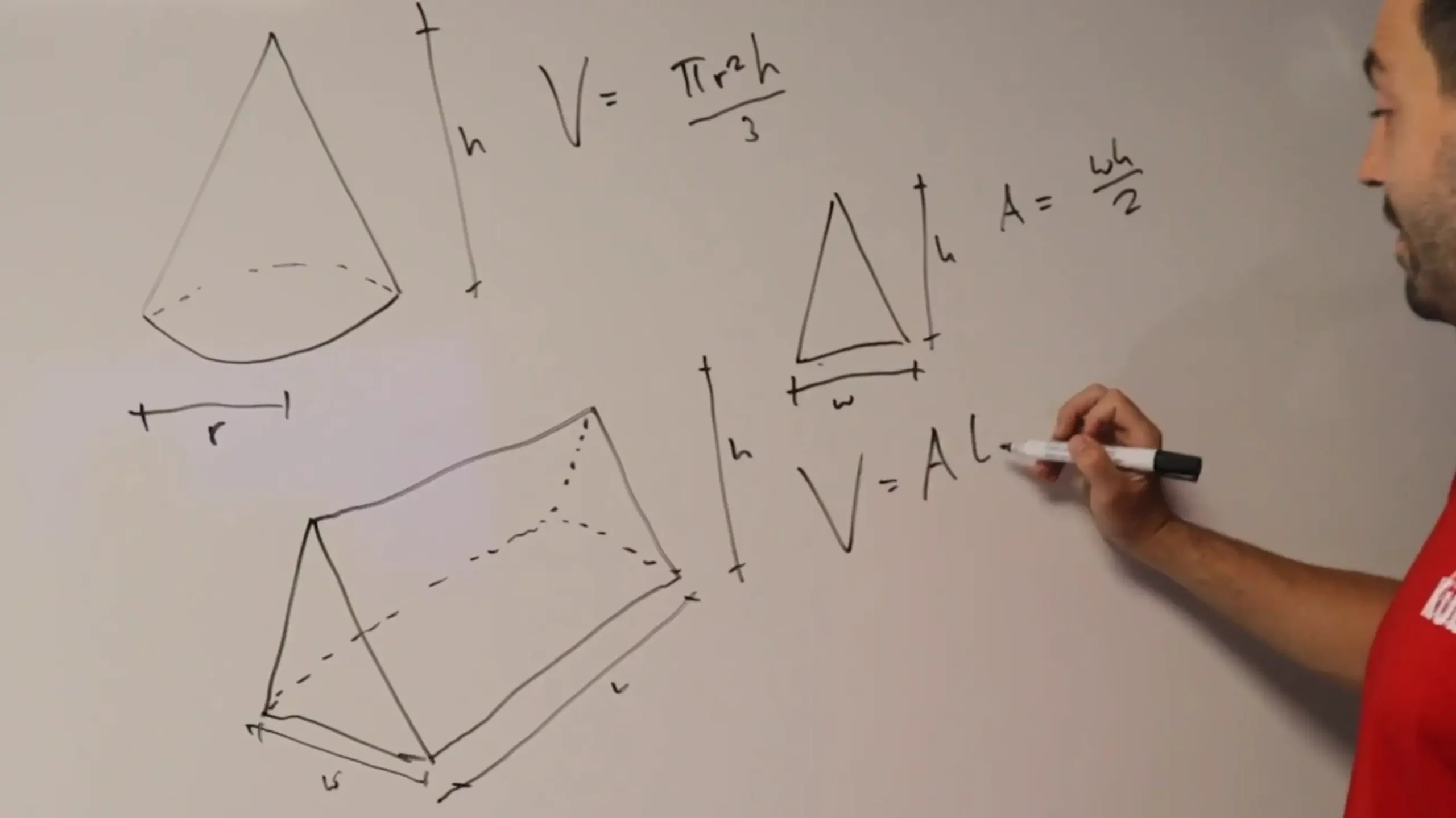
Some stockpiles form a long ridge rather than a cone. This can happen when material is tipped from a moving lorry or deposited in a line. In these cases, the stockpile can be approximated as a triangular prism.
To estimate the volume, measure the stockpile's width (W), height (H), and length (L). First calculate the area of the triangular end, then multiply it by the length of the pile.
Suppose a stockpile is 6 metres wide, 2 metres high, and 20 metres long.
First, calculate the area of the triangular cross-section, then multiply it by the stockpile's length.
V = (6 × 2 × 20) / 2
The estimated stockpile volume is 120 cubic metres.
This method provides a quick estimate for elongated stockpiles with a relatively consistent triangular cross-section. However, irregular slopes, rounded ends, and variations in height can affect the accuracy of the result.
Method 2: Using Cross Sections
Not all stockpiles resemble simple geometric shapes.
Larger or irregularly shaped piles may have varying heights, widths, and slopes, making basic geometric formulas less reliable.
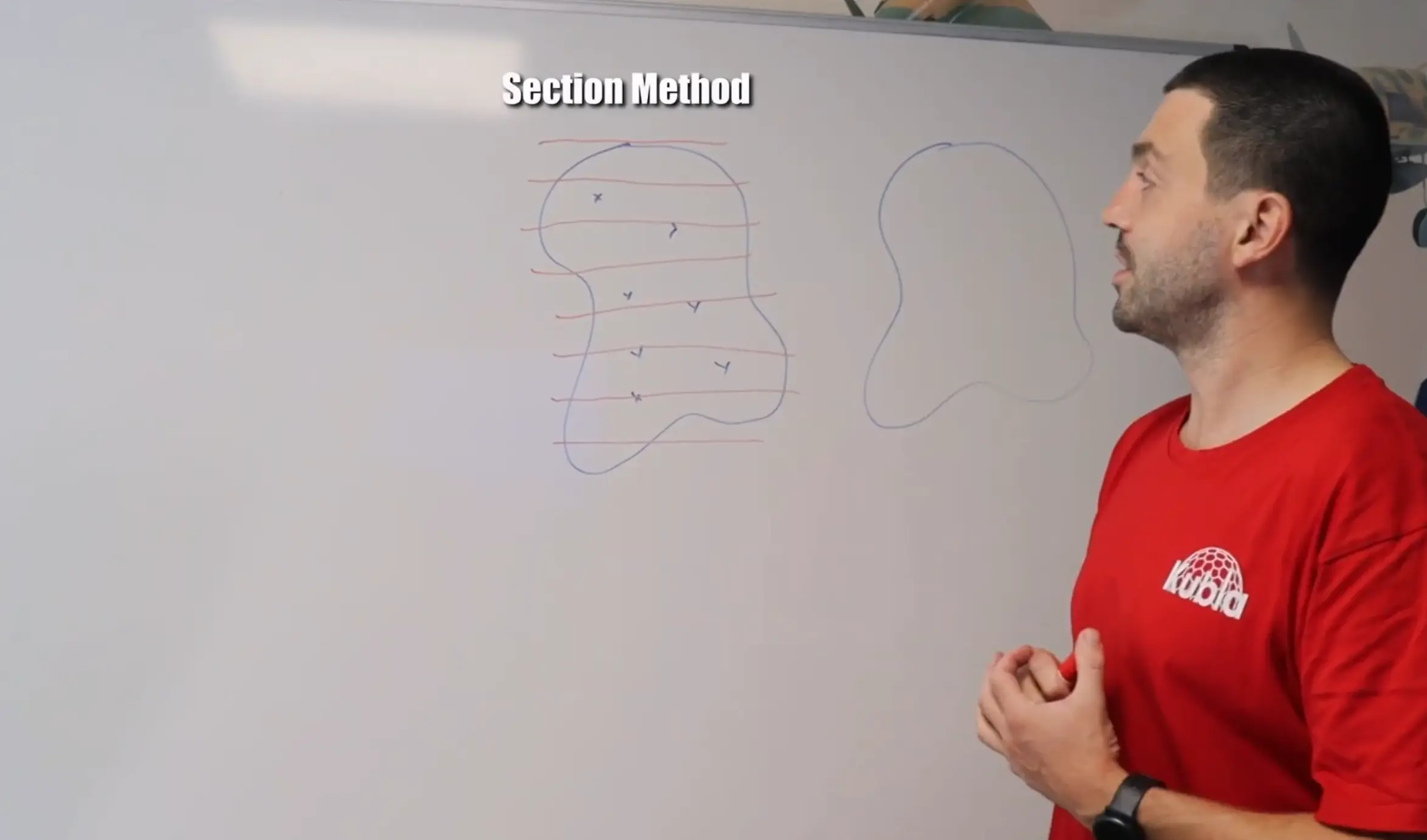
One way to estimate the volume of these stockpiles is to use the cross-section method, sometimes called the average end-area method.
This approach involves dividing the stockpile into a series of sections and calculating the volume between them.
- Obtain survey measurements showing the shape and elevations of the stockpile.
- Draw a series of cross-sections through the pile at regular intervals.
- Calculate the cross-sectional area of material above the underlying ground for each section.
- Estimate the volume between each pair of adjacent sections.
- Repeat the calculation and add the results to obtain the total stockpile volume.
For a complete stockpile, you would repeat the process across its entire length.
A2 = area of the second cross-section
L = distance between sections
Suppose two cross-sections are 5 metres apart.
The first section has an area of 12 m², while the second has an area of 16 m².
V = [(12 + 16) / 2] × 5
The estimated volume between these two sections is 70 cubic metres.
For a complete stockpile, you would repeat the process across its entire length.
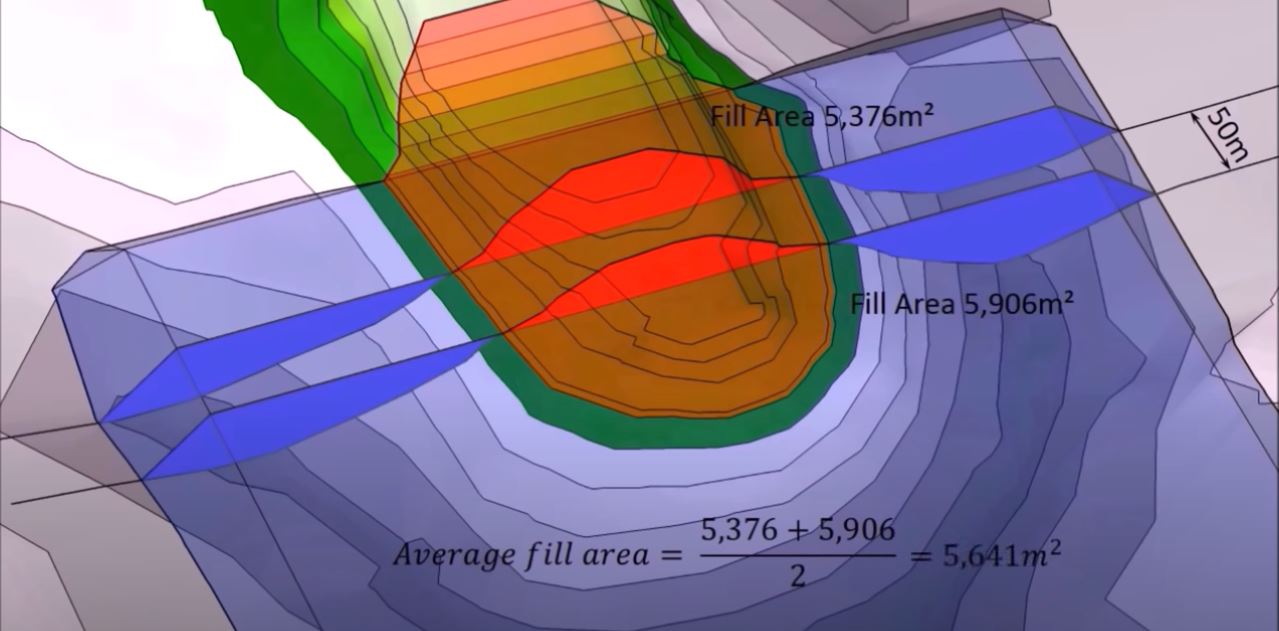
The cross-section method is useful for irregularly shaped stockpiles and can be carried out using graph paper or a spreadsheet.
However, it can become time-consuming, particularly when a large number of sections are required.
The accuracy of the result also depends on the quality of the survey data and the spacing between sections.
Method 3: Using Grids
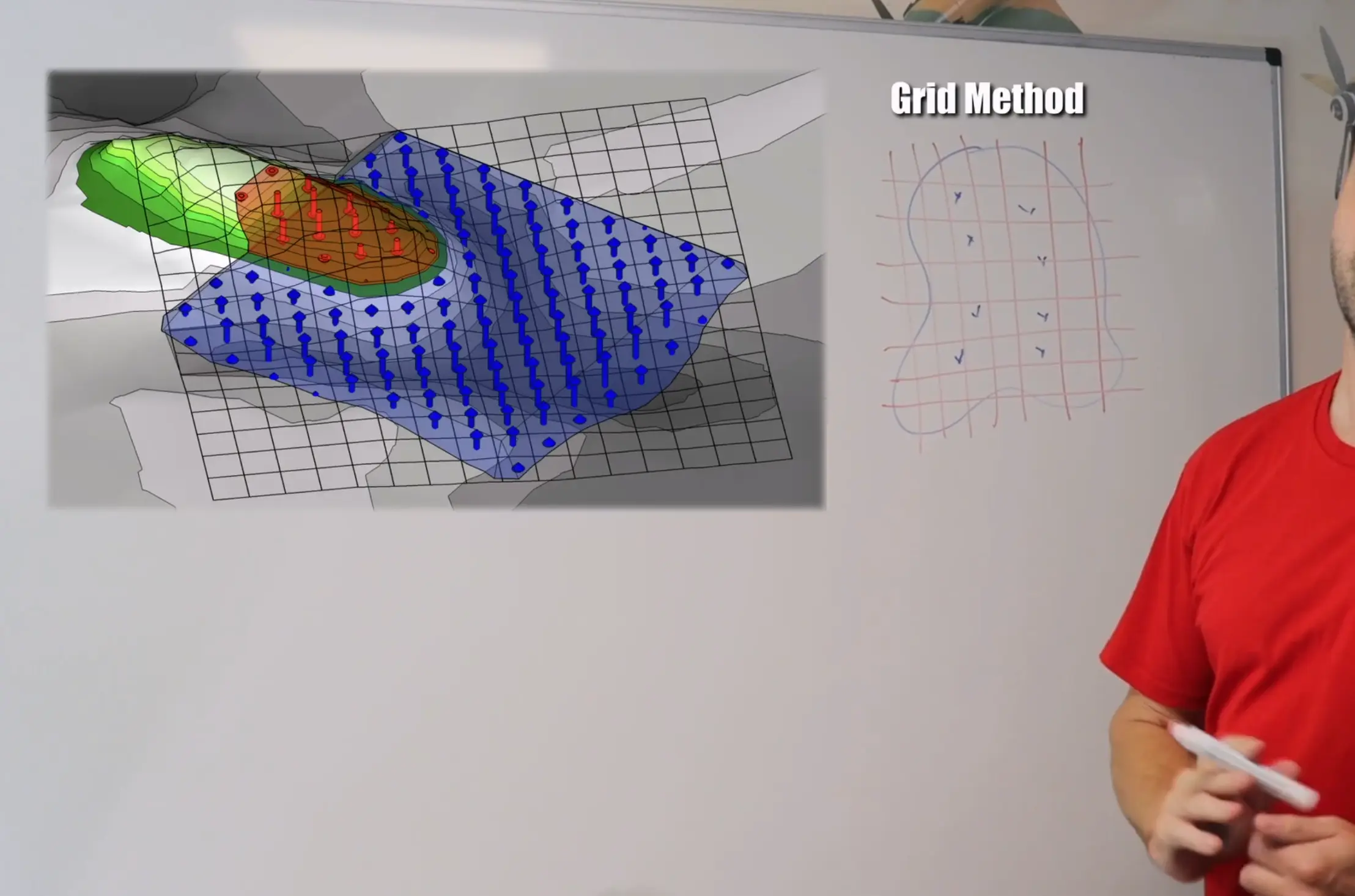
Another technique for estimating the volume of an irregular stockpile is the grid method.
Rather than dividing the stockpile into cross-sections, this method divides the area into a grid of smaller squares.
The volume within each grid cell is calculated using the difference between the stockpile surface elevation and the underlying ground elevation.
Start with a plan of the stockpile containing surveyed elevation data.
- Divide the stockpile area into a regular grid.
- Determine the stockpile surface elevation for each grid cell.
- Determine the underlying ground elevation for each cell.
- Calculate the difference between the two elevations.
- Multiply the elevation difference by the area of the grid cell.
- Add the calculated volumes to estimate the total stockpile volume.
Hs = stockpile surface elevation
Hg = underlying ground elevation
Suppose you're using a grid made up of 1 m × 1 m squares. Each square has an area of 1 m².
For one grid cell, the stockpile surface elevation is 22.5 m, and the ground elevation is 20 m.
V = 1 × (22.5 − 20)
This grid cell contains an estimated 2.5 cubic metres of material.
By repeating this calculation across all the grid cells, you can estimate the total stockpile volume.
The grid method is useful when working with irregular terrain and stockpiles that don't fit simple geometric shapes.
It can also be implemented in a spreadsheet.
However, the process involves a considerable amount of manual data entry, especially when using a fine grid.
Each cell requires elevation information, and errors can be difficult to identify when working with large datasets.
Method 4: Specialised Software
While manual calculations and spreadsheets can provide useful estimates, they can become laborious when dealing with complex stockpiles.
Specialist volumetric analysis software offers a faster and more visual alternative.
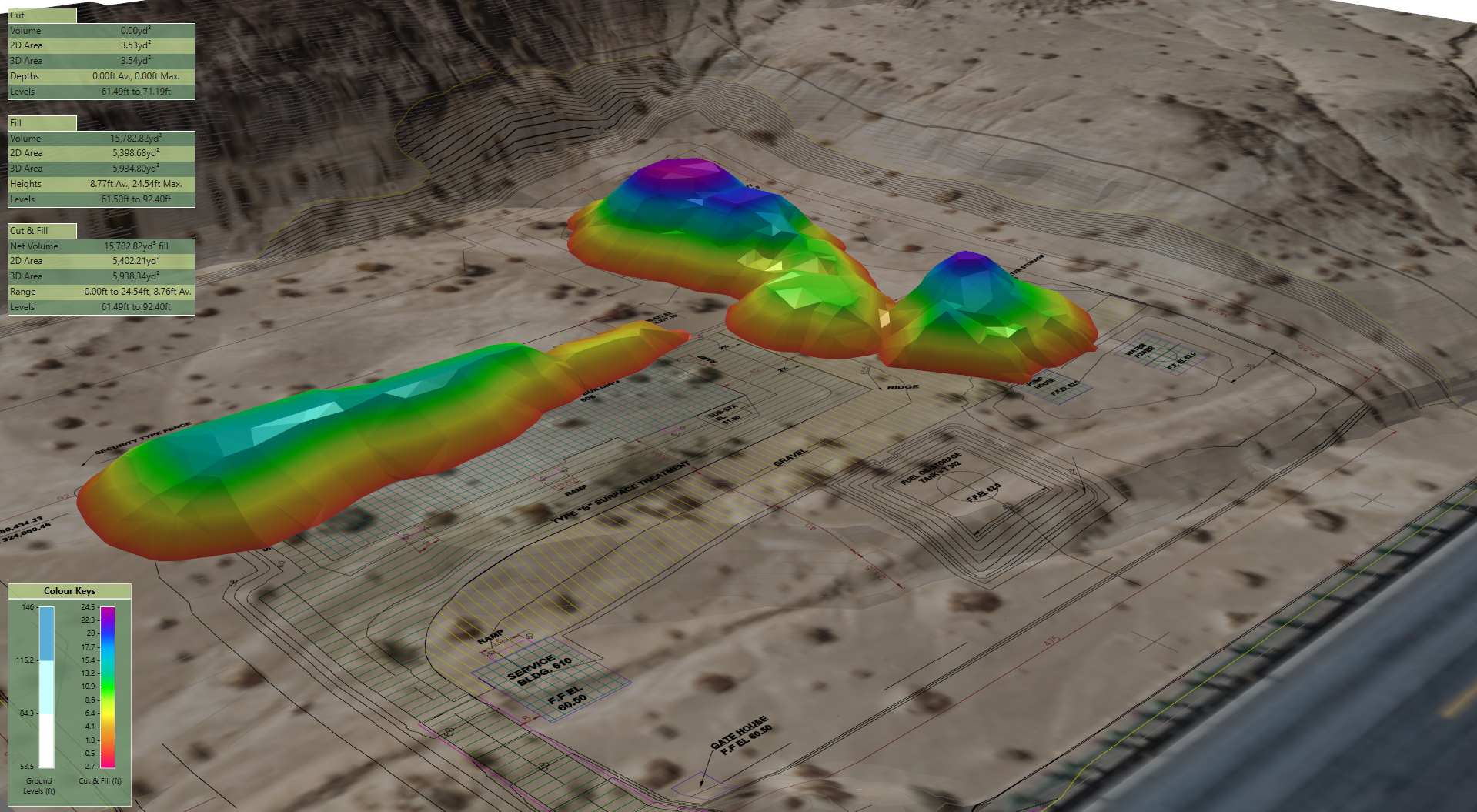
Kubla Cubed allows you to import survey data, create a 3D terrain model, and calculate earthworks volumes without manually processing individual sections or grid cells.

- Suitable for basic stockpile volume calculations.
- Ideal for stockpiles on flat ground.
- A straightforward way to estimate material quantities.
- Can be used as a project viewer by others in your team.
- Suitable for more complex stockpile calculations.
- Supports modelling of sloping or uneven ground.
- Provides additional surface-modelling capabilities.
- Ideal for detailed earthworks and terrain analysis.
New to Kubla Cubed? This guide introduces the interface and core features, providing a useful reference before you follow the stockpile volume tutorial below.
Step-by-step Tutorial
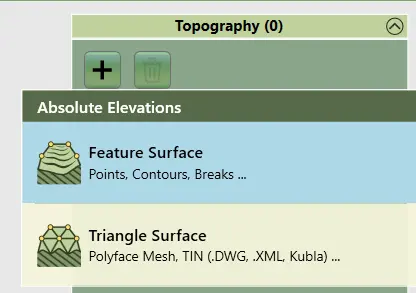
Select the Existing phase and create a Feature Surface to build your terrain model from survey data.
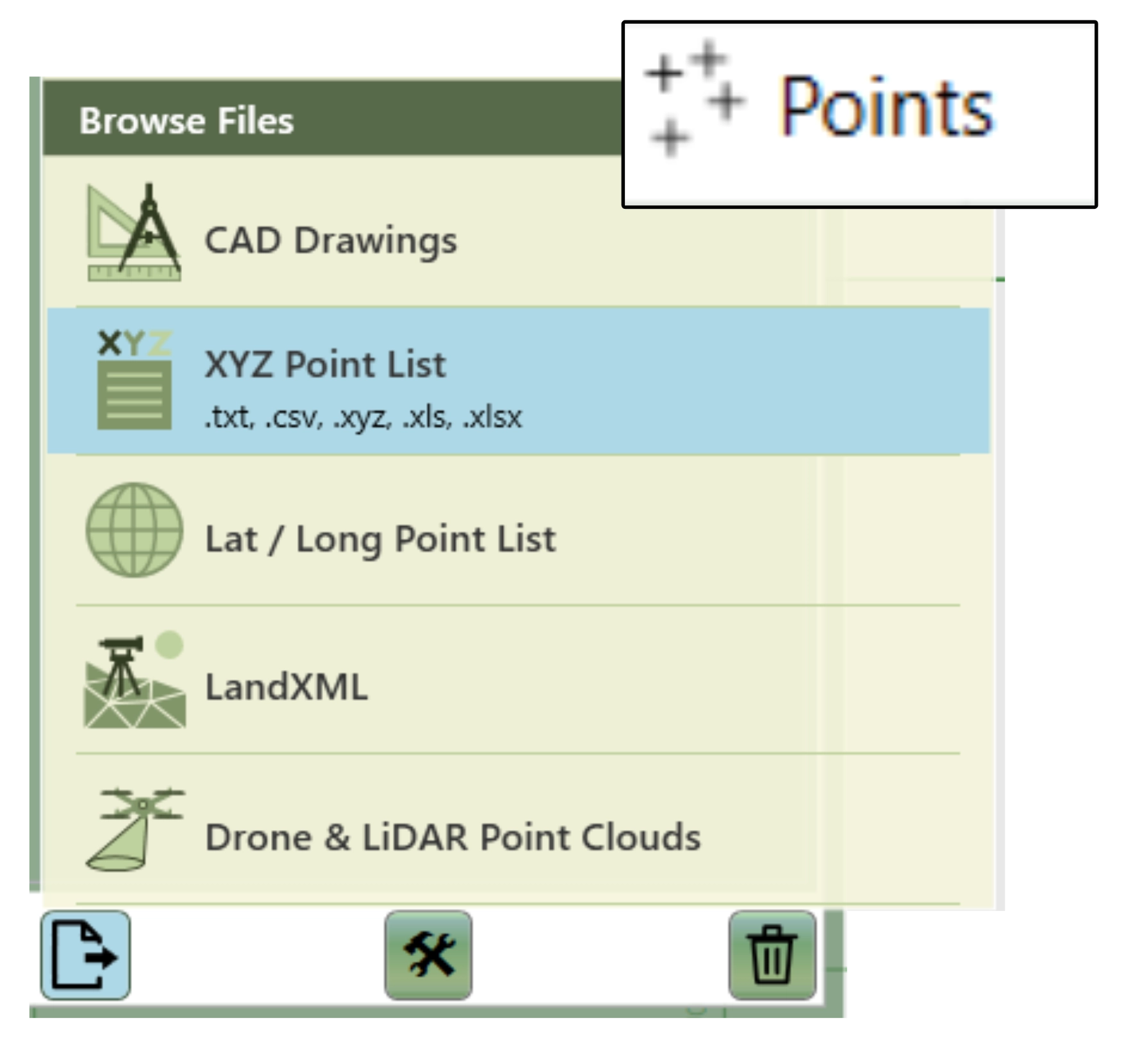
Under the Points tab, choose to Import from File. Bring in your XYZ point file containing the surveyed elevations, then use a Shrinkwrap Outline to create a boundary around the points.
View the imported surface in 3D and adjust the colour scheme to make the stockpiles easier to distinguish from the surrounding ground.

Return to the 2D view, navigate to the Proposed tab and add a Platform element. Then, click around the stockpile's perimeter to define the area to be measured.
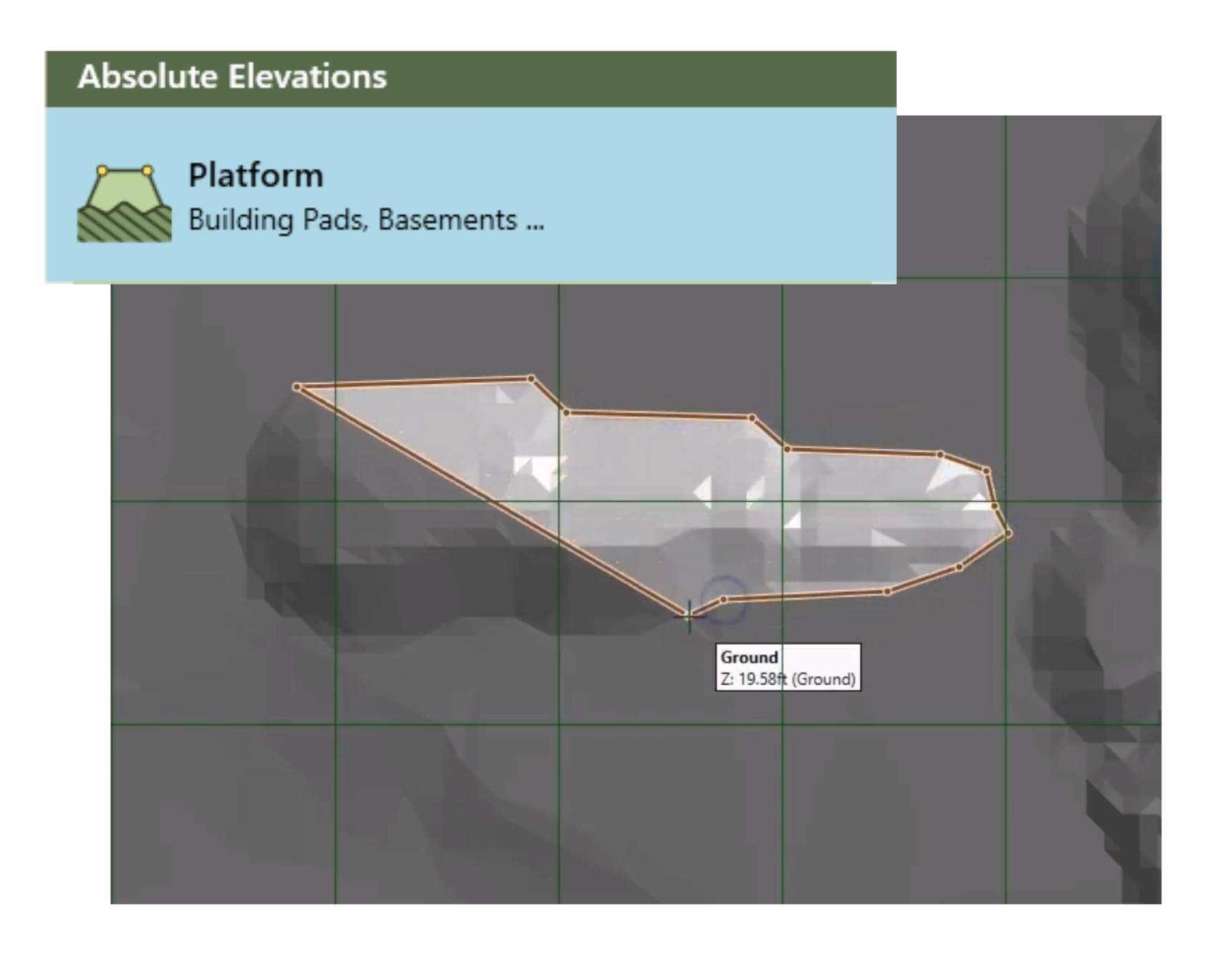
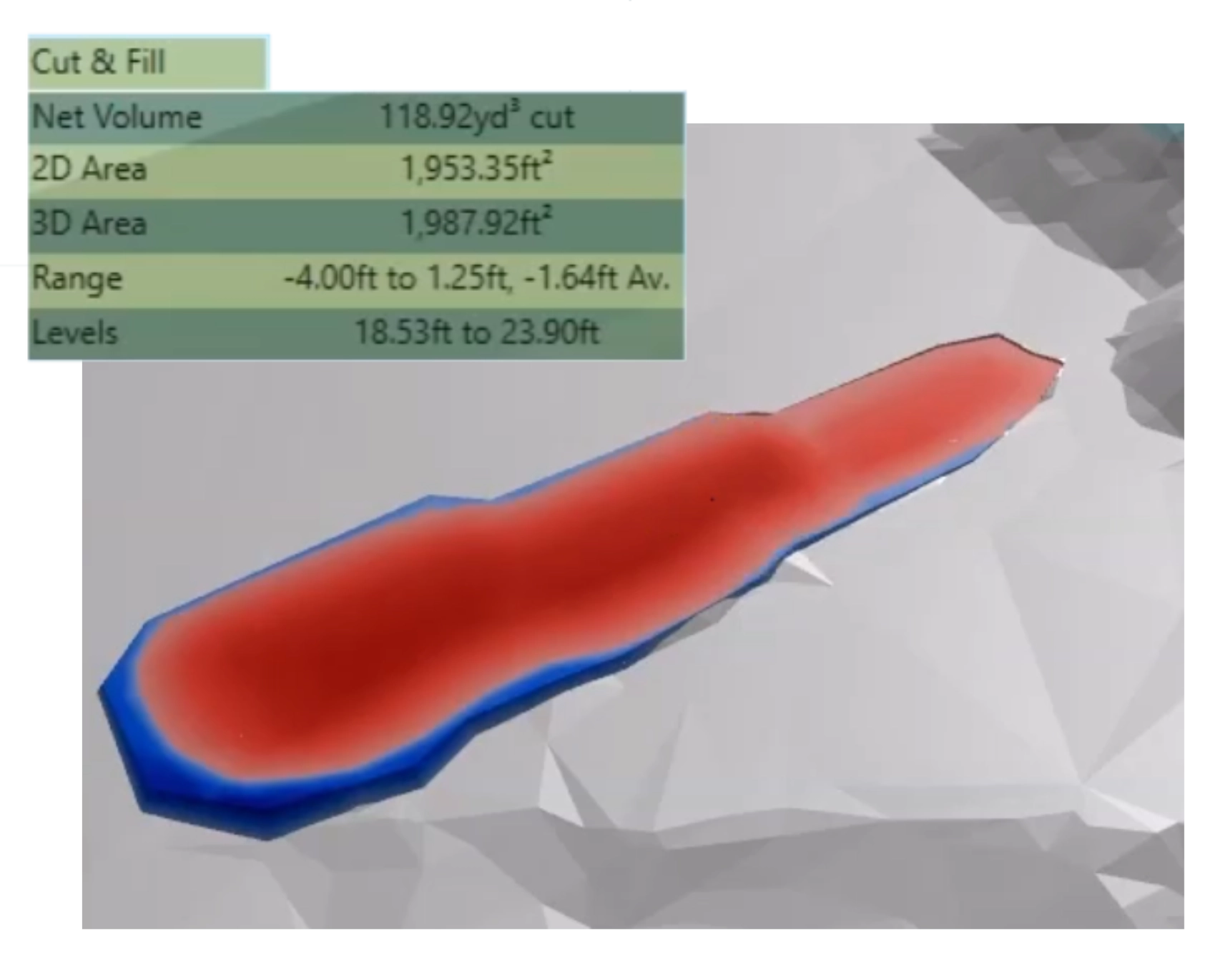
Set the Platform to the original ground elevation. The resulting cut volume represents the stockpile material above that level.
Images from Kubla Cubed 2026 – coming end of November
The platform method works best when the underlying ground can reasonably be represented by a flat plane.
If a stockpile sits on a slope or uneven terrain, a single platform elevation may not accurately represent the original ground surface.
In these situations, Kubla Cubed Professional allows you to model a more complex surface beneath the stockpile, accounting for variations in ground elevation to produce a more representative volume calculation.
As with any volumetric analysis, the accuracy of the results depends on the quality of the survey data and how accurately the original ground surface is represented.
Comparing Methods
Each method has its place, depending on the shape of the stockpile, the available survey information and the level of accuracy required.
| Method | Best For | Main Limitation |
|---|---|---|
| Geometric Formulas | Simple cone or triangular prism stockpiles | Assumes a regular shape |
| Cross-Section Method | Irregular or elongated stockpiles | Requires multiple section calculations |
| Grid Method | Irregular stockpiles with elevation survey data | Time-consuming manual data entry |
| Kubla Cubed | Stockpiles modelled from survey data | Requires suitable survey information |
There is no single best method for calculating stockpile volumes. The right approach depends on the stockpile's shape, the ground conditions, and the accuracy you need.
For simple, regularly shaped stockpiles, basic geometric formulas offer a fast way to estimate quantities using only a few measurements.
For more irregular stockpiles, the cross-section and grid methods can provide more detailed estimates, although they require additional survey data and calculations.
For a faster, more visual workflow, Kubla Cubed allows you to import survey information, model the stockpile, and calculate volumes directly.
Download Kubla Cubed Lite today to explore free stockpile calculation tools.
You can also subscribe to our YouTube channel for more tutorials on earthworks calculations, volumetric analysis, and construction estimating.
Explore Kubla Cubed →Further Resources
- Dedicated grid method tutorial
- Dedicated cross section tutorial
- Online stockpile calculators:
- More software articles
- Kubla Cubed video tutorials cover a broad range of topics related to using Kubla Cubed for volumetric analysis.